
SEO Fundamentals Every Business Owner Should Know in 2025
SEO gets overcomplicated fast. Business owners hear about algorithms, AI overviews, backlinks, Core Web Vitals, topical authority, schema, and a dozen other terms, then end up with one fair question: what actually matters if the goal is more qualified traffic and better leads?
The answer is simpler than the industry likes to admit. SEO fundamentals still matter because search engines still need to understand what your business does, which pages deserve to rank, and whether the site gives users a solid experience once they land. If those basics are weak, advanced tactics usually just decorate the problem.
What SEO is really supposed to do
SEO is not about chasing random traffic. It is about helping the right pages show up for the right searches so the site can attract people who are already looking for what you offer. That means a good SEO strategy connects search intent, site structure, content quality, and conversion paths instead of treating them like separate projects.
1. Give each important page a clear job
One of the most important SEO fundamentals is page ownership. Your homepage should not try to rank for everything. Your services page should not compete with every child service page. Your blog should support the site architecture instead of cannibalizing it.
- Use the homepage for broad brand and core-service visibility.
- Use service pages for specific commercial intent.
- Use blog posts to answer questions, support related topics, and feed internal links back to the right money pages.
When several pages chase the same keyword target, rankings usually get muddy instead of stronger.
2. Build solid on-page SEO before chasing bigger tactics
On-page SEO is still the foundation. Search engines need clear signals about what a page covers, who it helps, and why it deserves visibility.
- Use a clear title tag and meta description.
- Write one strong H1 and logical supporting headings.
- Match the content to the search intent instead of forcing keywords into weak copy.
- Keep pages readable, specific, and genuinely useful.
- Add internal links to related pages and next-step actions.
Fancy SEO tools do not fix vague pages. Clear positioning does.
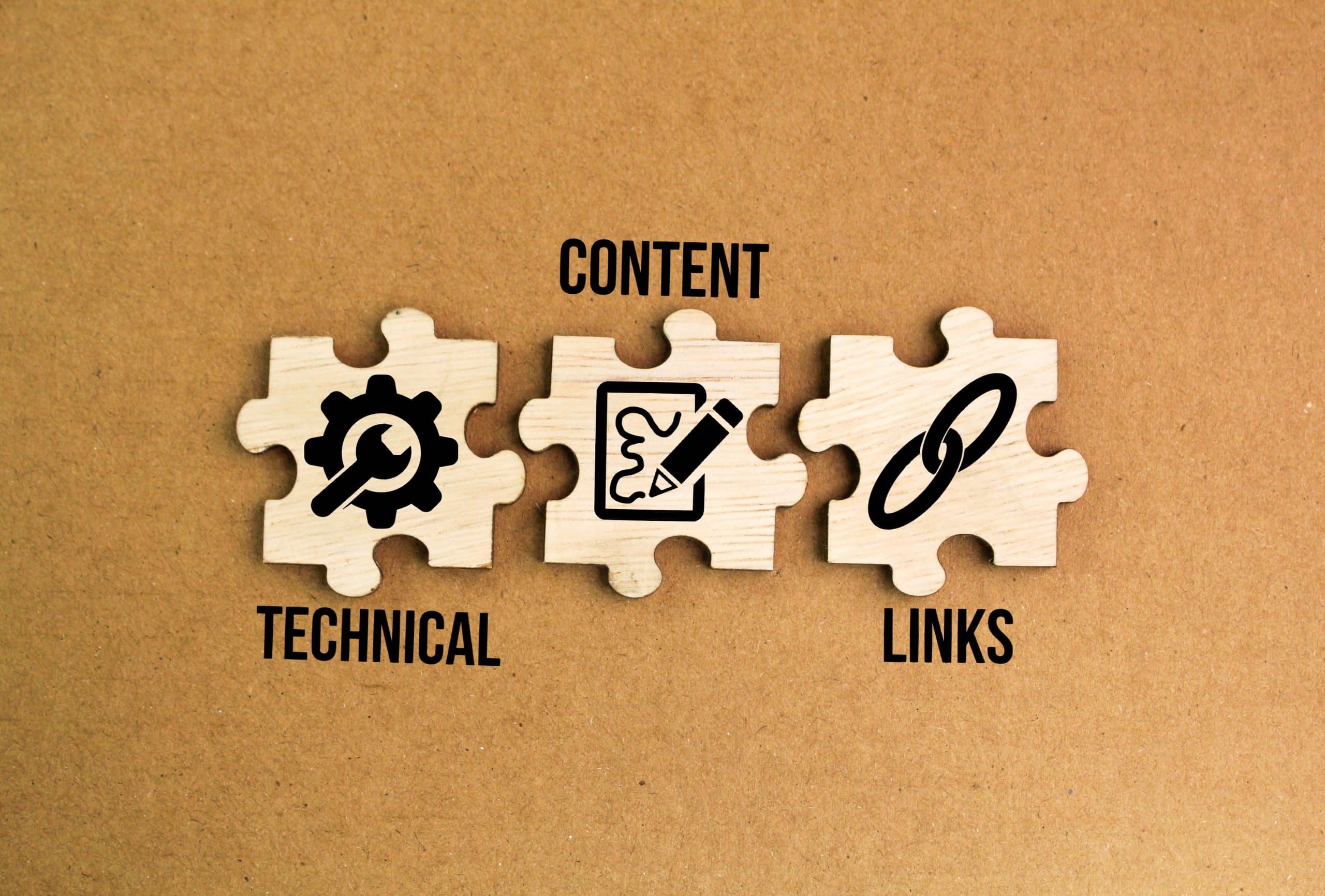
3. Do not ignore the technical layer
Strong copy alone will not carry a site that is slow, disorganized, or hard to crawl. Technical SEO fundamentals still matter in 2025 because they affect how easily Google can find, interpret, and trust your pages.
- Make sure important pages are crawlable and indexed.
- Keep mobile usability clean.
- Improve site speed and page stability.
- Use a clear internal-link structure.
- Clean up duplicate or overlapping URLs.
If the site foundation is messy, even strong content will underperform. That is why our SEO services often overlap directly with web design and development work.
4. Make sure local and authority signals support the site
For many small and mid-sized businesses, SEO is not only about national visibility. Local relevance, reviews, brand mentions, citations, and trust signals all strengthen the bigger picture. If the business depends on regional demand, local SEO and general SEO should work together, not compete for attention.
5. Measure what happens after the click
Another basic that gets skipped: track outcomes, not just rankings. Good SEO should help drive calls, forms, booked conversations, and qualified demand. If you only track impressions and clicks, you miss the part the business actually cares about.
Use Search Console, analytics, and conversion tracking to see which pages bring in real opportunities. Then improve the pages that already show potential instead of endlessly chasing vanity metrics.
Common SEO mistakes business owners should avoid
- Targeting the same keyword across too many pages.
- Publishing generic blog content with no internal-link purpose.
- Ignoring site speed and mobile experience.
- Writing for keyword density instead of readability.
- Measuring traffic without measuring conversions.
- Assuming a redesign automatically fixes SEO problems.
SEO fundamentals still win because they stack
The businesses that usually see the most consistent SEO results are not the ones chasing the loudest tactic of the month. They are the ones doing the fundamentals well, over time, with clear page ownership, solid structure, useful content, and better follow-through after the click.
If you want help tightening the basics before spending more effort on scattered tactics, contact Momentum Metrics. We can help you sort the real priorities from the SEO noise.
Frequently asked questions about SEO fundamentals
Are SEO fundamentals still enough in 2025?
They are still the foundation. Search has evolved, but clear targeting, solid technical performance, useful content, and strong page structure still do most of the heavy lifting.
How long does it take SEO fundamentals to start paying off?
That depends on competition, site quality, and how much cleanup is needed. But getting the fundamentals right usually creates more stable gains than short-term hacks.
Should I invest in SEO before rebuilding the website?
Usually yes, or at least plan them together. SEO can shape the structure and content priorities so a redesign does not accidentally create new search problems.